
The demands of caring for a child with Angelman can really add up
How I cope when everything starts feeling like too much
Written by |

Caring for our 3-year-old son, Jude, who lives with Angelman syndrome (deletion), has recently felt particularly challenging. Alongside his usual therapy appointments, we’ve had additional standardized assessments as we prepare for school and submit insurance applications.
More illnesses have traveled through our household this year than ever before, causing additional concerns, given that illness can trigger seizures for Jude.
As he grows, so do the physical demands of caring for him. Transfers in and out of the car, bath, medical equipment, and swimming pools require increasingly more effort, particularly when he reaches for my hair or glasses.
Recently, this all caught up with me. We’d spent the weekend closely monitoring him for seizure activity after he experienced unusual movements and balance issues. I was driving him to an appointment during rush-hour traffic on an unfamiliar route, while at the same time missing calls from work, our insurance provider, and Jude’s neurology team. I was frequently turning around to check on Jude in the back seat, aware that he’d previously had a seizure in the car. I’d remembered to take off his glasses to stop him chewing them, but somehow neglected to save his shoes from his mouth.

I suddenly felt overwhelmed. None of these things was particularly unusual in our daily lives, but together they represented the constant hum of parenting a child with Angelman syndrome: doctors to contact, medications to remember, vigilance around seizures and safety, therapies to coordinate, forms to complete, and developmental goals to consider. Even when I’m not actively doing something, I’m often thinking about what needs to happen next.
My immediate thought was, I really want to go for a run. But finding time for myself isn’t always straightforward. Even when something is scheduled, there is often an invisible asterisk beside it. Both a haircut and my own physiotherapy appointment were canceled at short notice this month and are yet to be rescheduled.
Looking after myself
So, what helps when everything starts feeling like too much?
First, I remind myself to pause. After arriving home that day, I stayed in the car with Jude for a few extra minutes. The rest of the day could wait while I sat in a little silence. I made sure I had something to eat and drink before returning the important phone calls.
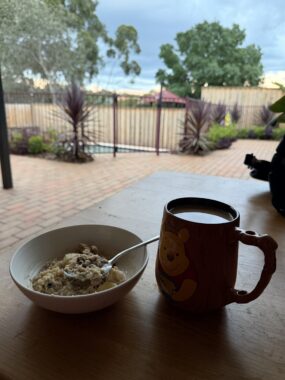
Joelene Wand enjoys a quiet moment of calm before the day begins. (Photo by Joelene Wand)
Secondly, there are small daily rituals I try to protect, like having breakfast in silence before everyone else wakes up or getting outside for a walk. They might seem insignificant, but I notice a difference in how I feel when I make room for them.
Finally, when everything feels like it’s competing for my attention, I make a list of what genuinely needs to be done that day and what can wait. Sometimes that means having frozen chicken nuggets for dinner and putting off a few emails if the day has felt particularly busy. Not every spare moment needs to be productive, and not everything needs to happen today.
Caring for a child living with Angelman syndrome comes with a level of responsibility that can be relentless, even when it’s a responsibility you wouldn’t trade. There will always be things that need our attention, but we don’t have to give them all of our attention all of the time.
Looking after ourselves first doesn’t require a whole afternoon or making grand plans. Sometimes it’s a walk or five minutes of quiet before the day gets going. While I still haven’t managed to fit in that run I’ve been longing for, I look forward to the day when I can. For now, these smaller moments help me get through the demands of each day so I can show up and remain present for Jude.
Note: Angelman Syndrome News is strictly a news and information website about the disease. It does not provide medical advice, diagnosis, or treatment. This content is not intended to be a substitute for professional medical advice, diagnosis, or treatment. Always seek the advice of your physician or other qualified health provider with any questions you may have regarding a medical condition. Never disregard professional medical advice or delay in seeking it because of something you have read on this website. The opinions expressed in this column are not those of Angelman Syndrome News or its parent company, Bionews, and are intended to spark discussion about issues pertaining to Angelman syndrome.

Leave a comment
Fill in the required fields to post. Your email address will not be published.