
What we pack for the hospital for a child with Angelman syndrome
Even if our son isn't admitted, we'd rather be overprepared
Written by |

These days, if my husband and I have to take our 3-year-old son, Jude, who lives with Angelman syndrome, to the hospital, we’ve learned to pack as though we’ll be staying overnight. Even if we have no idea whether he’ll actually be admitted, we’d rather be overprepared than find ourselves wishing we’d packed something once we’re already there. This is especially important because we don’t live near the children’s hospital. And with a child who has complex needs, going home and returning later isn’t always practical.
The following is what my husband and I pack for Jude — and for ourselves — whenever we go to the hospital.

For our son
Clothing: We like to pack button-up long-sleeve shirts or cardigans to cover Jude’s arms if he has cannulas or IV lines in, since he will inevitably pick at them. Several changes of clothing are required. After a seizure, Jude may have vomiting or gagging episodes. Medical professionals have also cut through his clothes in emergencies. And accidents, drooling, or messy eating can require additional outfit changes. We pack enough nappies and clothing for at least a three-night stay, even if we expect to be home sooner.
Medication: We always keep Jude’s regular sleep and seizure medications and his fluid thickener with us, even if the hospital administers them. Hospital staff can understandably be busy, or there may be delays in getting medications from the hospital pharmacy, so we prefer to have his meds handy, just in case.
Food and drink: We like to pack Jude’s favorite snacks and familiar foods that we know he will eat, particularly if he is feeling unwell. For Jude, apple juice is reserved for sick days, and he’ll never say no to sultanas and oatmeal.
Comfort and entertainment: We always pack Jude’s favorite toys and comfort items, like his Winnie-the-Pooh stuffie or chew jewelry. Something familiar can make an unfamiliar hospital room feel a little less overwhelming.
Equipment: In addition to Jude’s disability stroller, we pack a removable child’s toilet seat, as most hospitals we’ve attended don’t have toilets specifically for children.
Medical summary: We’ve been told by countless hospital staff that one of the most useful items we bring isn’t something Jude uses at all. It’s a one-page summary about him, which has been photographed so many times that we’ve learned to keep several copies with us.
It includes his seizure history and current medications, so that we can quickly give hospital staff an overview of Jude without having to explain everything from scratch, particularly when we’re tired or stressed.
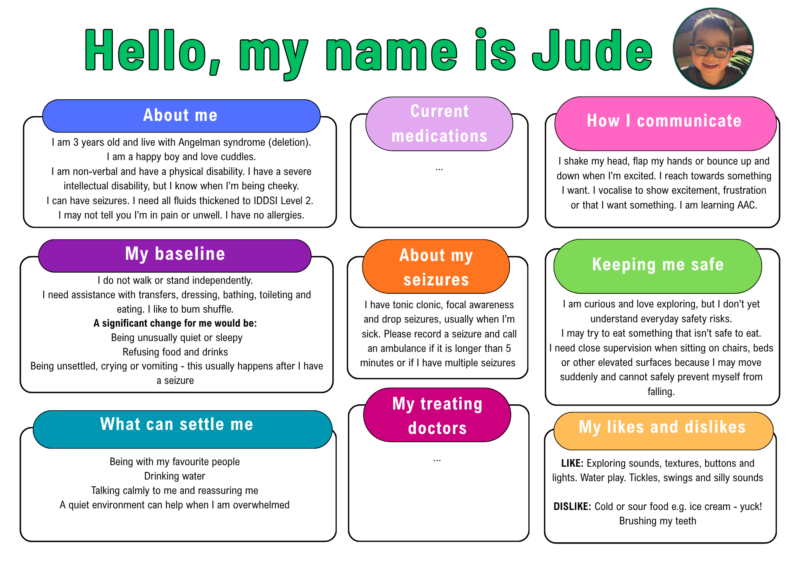
A summary of Jude is helpful to have at the hospital. (Courtesy of Joelene Wand)
For us as parents
My husband and I also pack for ourselves as though we’ll be staying at the hospital for a few nights. We bring:
- Several changes of clothes
- Phone chargers and charging cables
- Something to keep us entertained during long waits, such as laptops, tablets, and headphones
- Snacks and water bottles
For us, packing for the hospital isn’t about assuming we’ll be admitted. It’s about knowing that, if we are, we’ll have enough to make the next few days a little easier.
When caring for a medically complex child, there are already so many things to think about and so much that is outside your control. Having the items we know Jude will need, and a few things that make the hospital environment more comfortable for us, means one less thing for us to worry about. Hopefully, we won’t need any of it. But if we do, we’ll be glad we brought it.
Note: Angelman Syndrome News is strictly a news and information website about the disease. It does not provide medical advice, diagnosis, or treatment. This content is not intended to be a substitute for professional medical advice, diagnosis, or treatment. Always seek the advice of your physician or other qualified health provider with any questions you may have regarding a medical condition. Never disregard professional medical advice or delay in seeking it because of something you have read on this website. The opinions expressed in this column are not those of Angelman Syndrome News or its parent company, Bionews, and are intended to spark discussion about issues pertaining to Angelman syndrome.



Leave a comment
Fill in the required fields to post. Your email address will not be published.