After Aspire trial: Holding on to hope for the Angelman syndrome community
A mom reflects on disappointment, her son’s worth, and moving forward
Written by |
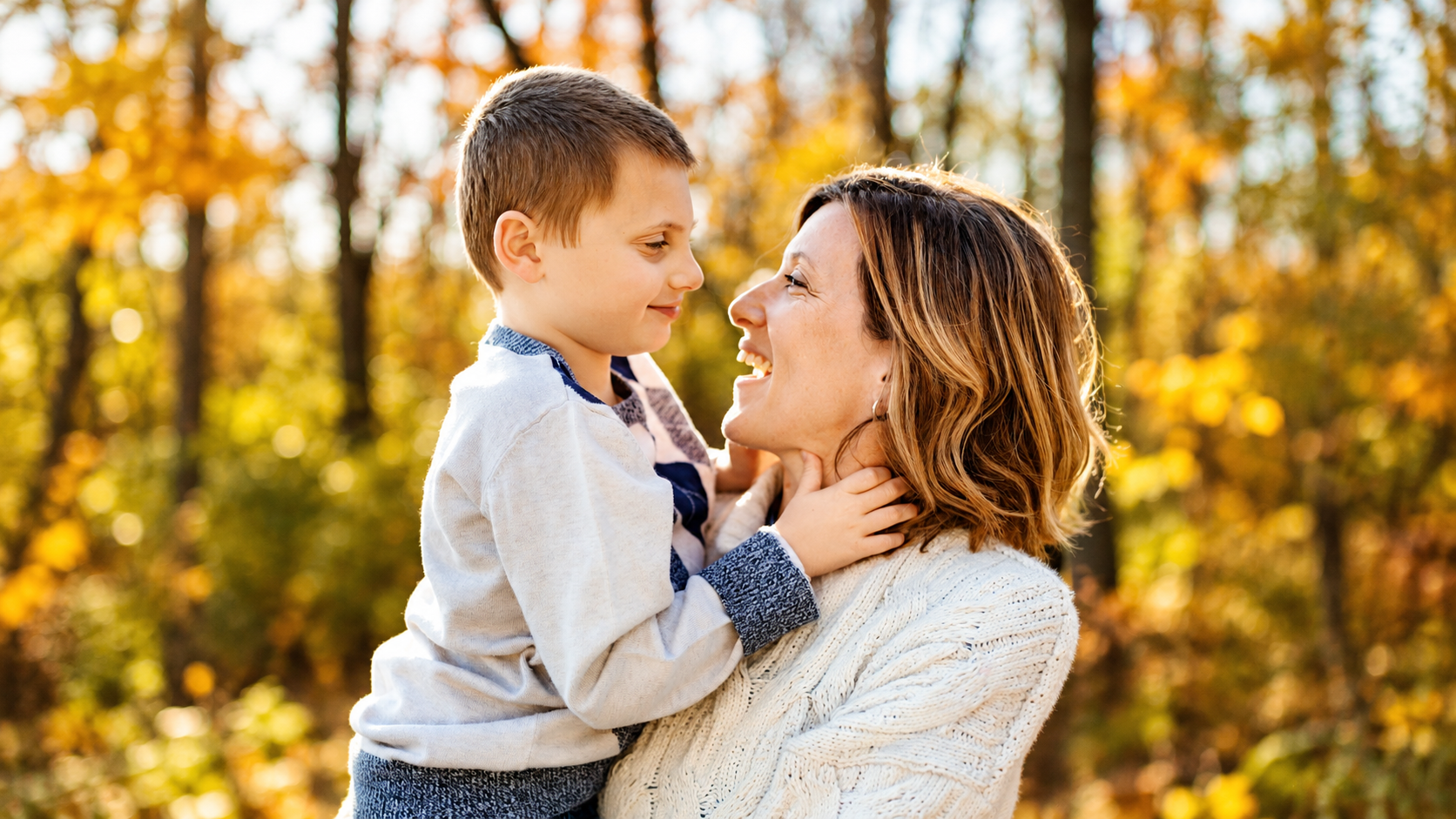
Amanda Moore and her son Jackson enjoy the outdoors. (Courtesy of Amanda Moore)
When the Aspire results came out, I read them twice. First, as the CEO of the Angelman Syndrome Foundation, my mind went to our families. What do they need to know? What questions will they have? How can we support them?
Then I read them as Jackson’s mom. No matter how many scientists I talk with or clinical trials I follow, I am still a mom who wants more for her son. More words. More independence. More restful nights. More opportunities. More ways for Jackson to show the world everything I already know is inside of him.
So, yes, that second read hurt. And I know it hurt many of you, too.
Aspire was Ultragenyx’s Phase 3 trial of apazunersen, an investigational therapy designed to restore UBE3A protein production in the brain. The trial did not demonstrate a benefit over the sham group on its primary or key secondary measures.
Those results were deeply disappointing. We should be able to say that without immediately trying to make it feel better. Families traveled, rearranged their lives, sat through procedures, completed assessments, and carried an enormous amount of hope.
But this result does not mean the science of Angelman syndrome has failed or that hope was misplaced. Other therapies differ, and one trial cannot answer every question. Our responsibility now is to learn, including whether we are measuring meaningful change in the right ways.
At the Angelman Syndrome Foundation, we received more research proposals this year than ever before. Scientists still see questions worth pursuing and opportunities worth exploring. Their commitment gives me another reason to believe in what comes next.
Families have described meaningful everyday changes. Clinical trials must also demonstrate benefit objectively and rigorously. Both can be true. The family voice must remain part of how trials are designed and success is defined.
I want every Aspire family to hear: You did not fail this trial. Your child did not fail this trial. And the time you gave was not wasted.
Every appointment, assessment, disruption to your family’s routine, and piece of data contributed to our understanding. Research cannot happen without families willing to step into uncertainty so those coming behind them might have more answers.
That is an extraordinary gift. Thank you.
This community doesn’t stop. I have watched families advocate in Congress, join studies, and tell their stories again and again.
After the difficult trial news, you checked on one another. You asked hard questions. You cried together. And you asked, “What’s next?” There is room for all of that, including those who need more time to look ahead.
No endpoint can measure his worth
And then there is Jackson. Long before I knew the words UBE3A, endpoint, or biomarker, I knew my son.
I knew his laugh and how his entire face could light up. I knew how hard he worked for things that came easily to other children. I knew how much he understood even when he couldn’t tell me with words.
Angelman syndrome has changed our family’s life. Jackson has changed mine. He is why I walked into this work.
Jackson doesn’t know whether a primary endpoint was met. He is still Jackson. He still finds joy in ways that stop me in my tracks. He still teaches me about patience, love, and what it means to keep showing up.
No clinical trial result can change his value. No endpoint can measure his worth. That is true for every person living with Angelman syndrome.
So, where do we go from here?
We learn. We ask difficult questions. We listen to families. We build better trials and better ways to measure meaningful change. We invest in researchers with bold ideas, strengthen access to knowledgeable care, and support families struggling today.
We keep bringing researchers, clinicians, industry, regulators, and families together. Hope was never supposed to rest on one drug, one company, or one trial. It rests on a field this community has spent decades building.
As CEO, I wanted a different result for our community. As Jackson’s mom, I desperately wanted a different result for my son.
But I am not defeated. There are still questions to answer and families to support. And Jackson is still Jackson. For me, that is more than enough reason to get up tomorrow and keep going.
This article was provided by our partner, the Angelman Syndrome Foundation. It has been reviewed by Bionews for accuracy and relevance. The views and opinions expressed are those of the author and do not necessarily reflect the views of Bionews or Angelman Syndrome News.