
What standardized assessments miss about my son with Angelman
While necessary, these forms don't capture the full picture of who Jude is
Written by |

These days, when friends and family ask about my 3-year-old son, Jude, who lives with Angelman syndrome, my answer comes easily.
I tell them about his sweet, affectionate nature, like how he leans into us for cuddles and loves giving high-fives. I talk about his interests, like his newfound love of “The Wiggles.” I proudly share photos and videos of his latest achievements, like holding himself up to stand for 30 seconds, or pulling himself up to sit in his cot. These moments were hard-won and deeply worth celebrating.
But there is another version of this answer that’s reserved for schools, disability providers, or funding applications for equipment Jude needs. It is still truthful, but it tells a very different story.

It stings to focus on what Jude can’t do
This version focuses on Jude’s challenges. On the ways he struggles with balance and gross motor skills, like not yet being able to sit safely on a chair without support. Or how he is nonverbal and cannot communicate his basic needs, such as the word “help,” meaning he once suffered through a fractured arm for two and a half weeks before his medical team, his dad, or I realized he had been injured.
To access the support Jude genuinely needs, these challenges must be documented, measured, and sometimes reduced to data in formal assessments of cognition, functional skills, and speech and language.
During some assessments, I watch as Jude is unable to complete tasks or follow instructions. With others, I am the one completing it, answering questions about what he can and cannot do. I recently completed an assessment in which I identified just one of 89 words typically understood by children ages 8 to 18 months that Jude could understand.
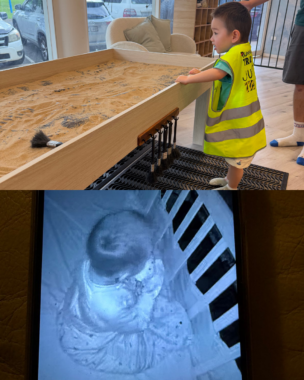
Jude experienced two firsts in March 2026: holding himself up to stand for 30 seconds (top) and pulling himself up to sit in his cot. (Courtesy of Joelene Wand)
Observing your child being assessed on their inability to complete daily functional skills, or being asked to confirm those matters in writing, is uniquely confronting. It stings.
There is no space on these forms to describe Jude’s laugh or the connection he shares with his friends and family without words. Instead, there are boxes left unticked. Scores that equate his communication or fine motor skills to those of a 6-month-old. Language that labels him as “profoundly delayed” or “significantly impaired.”
These moments are not one-offs. Jude has been having these assessments since he was 11 months old, and they will continue throughout his life. They are necessary to open doors to funding, therapies, and educational environments where he can learn, grow, and be as supported as possible. But they can feel incredibly reductive, as they are designed to measure what our children cannot do, rather than who they are.
Two things can exist at once. Jude faces significant challenges, as described in the many assessments he’s undergone over the last two and a half years. But he is also so much more than an assessment could ever capture. No standardized test can measure the determination behind every small milestone he has reached or the years of effort behind what might look like a simple action to most.
Standardized assessments are part of advocating for our children, even when they feel clinical and at odds with how we see them. But it does not define them, and as carers, we know our children more than any test ever will.
Note: Angelman Syndrome News is strictly a news and information website about the disease. It does not provide medical advice, diagnosis, or treatment. This content is not intended to be a substitute for professional medical advice, diagnosis, or treatment. Always seek the advice of your physician or other qualified health provider with any questions you may have regarding a medical condition. Never disregard professional medical advice or delay in seeking it because of something you have read on this website. The opinions expressed in this column are not those of Angelman Syndrome News or its parent company, Bionews, and are intended to spark discussion about issues pertaining to Angelman syndrome.


Leave a comment
Fill in the required fields to post. Your email address will not be published.